
What are the LLC Articles of Organization in Delaware?

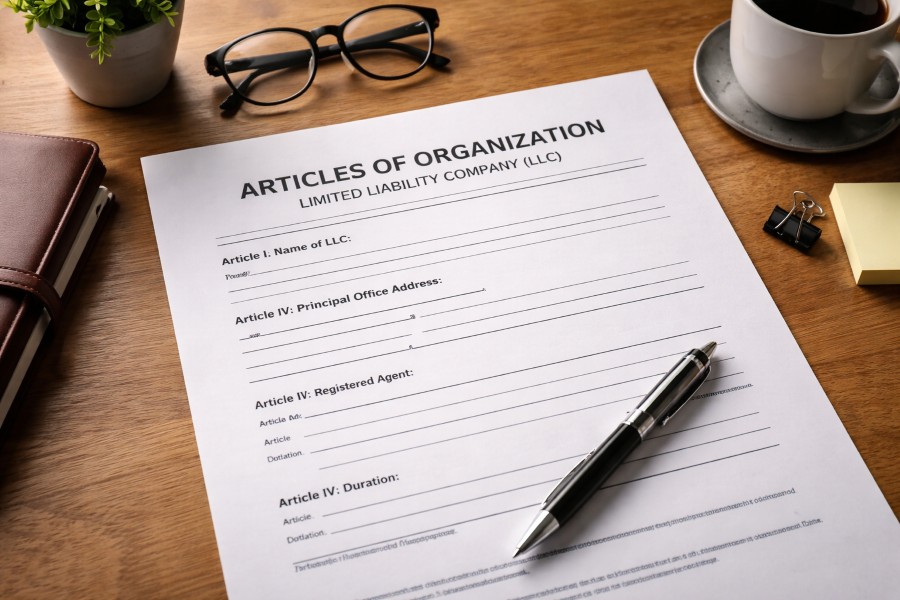 TLDR: To legally establish a Delaware LLC, you must file a Certificate of Formation, Delaware’s version of Articles of Organization. In Delaware, the filing requires only the LLC name and a registered agent, allowing owners to remain off the public record while establishing the separate legal entity.
If you want to form an LLC, the Articles of Organization are often the document that officially creates the company. Once this document is filed and approved, your LLC legally exists.
However, while most states use the term "Articles of Organization," Delaware uses the term Certificate of Formation. Understanding what goes into the Certificate of Formation can help you avoid delays and ensure your Delaware company is formed correctly from the start.
What Are LLC Articles of Organization?
Articles of Organization are the formation document for a limited liability company. Some states call this document a Certificate of Formation or Certificate of Organization, but in Delaware, the official term is Certificate of Formation.
This document is filed with the state to:
- Legally create the LLC
- Establish its name
- Designate its registered agent
- Confirm that it is authorized to do business
Once the state accepts the filing, the LLC becomes a separate legal entity. That separation is what provides limited liability protection to the owners, known as members.
Key Differences in Delaware
While the function is the same, Delaware’s document is unique. Unlike many states, Delaware does not require you to list the names or addresses of the LLC's members or managers on the Certificate of Formation. Instead, the document is usually signed by an "Authorized Person" (often a lawyer or a formation service) rather than the actual owners, which keeps your name off the public record entirely.
By default, the Delaware Division of Corporations only requires two pieces of information: the name of the LLC and the name/address of your Registered Agent. Because Delaware requires every LLC to maintain a registered agent with a physical address in the state, selecting a reliable registered agent is an essential part of the filing process.
How to File the Delaware Certificate of Formation
Many entrepreneurs choose to form a Delaware LLC through a professional service to ensure the filing is completed accurately and efficiently. Harvard Business Services, Inc., for example, specializes in Delaware formations and serves as the registered agent for thousands of businesses.
What Happens After Filing?
Once your Articles of Organization are approved, formation is complete. However, several important steps may follow. Many businesses will need to:
- Obtain an EIN from the IRS
- Draft an operating agreement
- Open a business bank account
- Register for any required state or local licenses
- Pay Delaware’s annual franchise tax
Delaware LLCs do not file an annual report, but they must pay a flat annual franchise tax and maintain a registered agent to remain in good standing. If you plan to operate physically in another state, you may also need to complete foreign qualification.
You can also request a certified copy of your Certificate of Formation or a Certificate of Good Standing if needed for banks, lenders, or investors.
Forming an LLC in Delaware
Delaware is known for its established business laws, efficient filing system, and strong privacy protections. The state does not require member names in the public formation document, and its Court of Chancery focuses specifically on business matters.
For entrepreneurs who want a flexible and widely recognized legal structure, forming a Delaware LLC is often a strategic choice. If you are ready to file your Certificate of Formation, working with a trusted Delaware registered agent can simplify the process and help ensure your business starts on solid legal ground.
FAQs
Is the Certificate of Formation the same as Articles of Organization in Delaware?
Yes. Delaware uses the term Certificate of Formation instead of Articles of Organization. This document serves the same purpose and officially creates the LLC once filed and accepted by the Delaware Division of Corporations.
How much does it cost to file LLC Articles of Organization in Delaware?
Delaware charges a state filing fee to submit the Certificate of Formation. Additional fees may apply for expedited processing or if you use a registered agent or formation service.
Can I change my Articles of Organization after filing?
Yes. You can file a Certificate of Amendment with the Delaware Division of Corporations if you need to update the LLC’s name or other filed information.
*Disclaimer*: Harvard Business Services, Inc. is neither a law firm nor an accounting firm and, even in cases where the author is an attorney, or a tax professional, nothing in this article constitutes legal or tax advice. This article provides general commentary on, and analysis of, the subject addressed. We strongly advise that you consult an attorney or tax professional to receive legal or tax guidance tailored to your specific circumstances. Any action taken or not taken based on this article is at your own risk. If an article cites or provides a link to third-party sources or websites, Harvard Business Services, Inc. is not responsible for and makes no representations regarding such source’s content or accuracy. Opinions expressed in this article do not necessarily reflect those of Harvard Business Services, Inc.