
Foreign Qualification: Doing Business in Other States
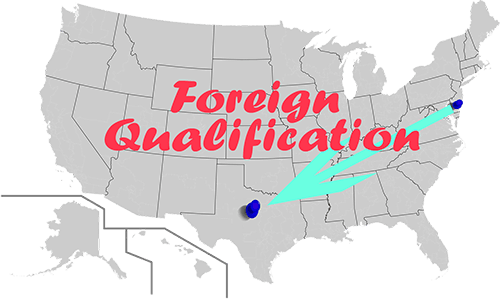 If you've formed a Delaware LLC or corporation, you might wonder: "Can I actually operate my business in California, Texas, or any other state?" The answer is yes—but you'll need to complete a process called Foreign Qualification.
What is Foreign Qualification?
Foreign qualification is the process of registering your Delaware company to legally conduct business in another state. When you foreign qualify, your company remains a Delaware entity (governed by Delaware's corporate laws) but gains permission to operate in the additional state.
Think of it this way: Your company is "domestic" to Delaware and "foreign" to all other states. Foreign qualification is how you get permission to do business in those other states.
When Do You Need to Foreign Qualify?
The question of whether you need to foreign qualify depends on what constitutes "doing business" in a state. While each state has its own definition, you typically need to foreign qualify if you:
- Maintain a physical office or location in the state
- Hire employees who work in the state (including remote employees working from home)
- Own or lease real property in the state
- Maintain a business bank account in certain states
- Store inventory or goods in the state
- Have ongoing contracts that require regular physical presence
The Remote Work Factor
Since the pandemic, remote work has created new foreign qualification questions. If you hire a remote employee who lives and works in Colorado, you're typically doing business in Colorado—even if that employee works from their home office. This has become one of the most common triggers for foreign qualification today.
What Usually Doesn't Require Foreign Qualification
Most states consider these activities acceptable without foreign qualification:
- Selling products online to customers in the state (without physical presence)
- Attending conferences or trade shows
- Conducting isolated transactions or one-time contracts
- Maintaining a bank account alone (in most states)
- Having remote contractors (not employees) in the state
- Defending lawsuits in the state
When in doubt, consult with a legal or tax professional. The line between "doing business" and "not doing business" can be gray, and the consequences of getting it wrong can be significant.
What Documents Do You Need?
When filing for foreign qualification, states typically require documentation from Delaware to verify your company's legitimacy and good standing. The two most common documents requested are:
Certificate of Good Standing (also called Certificate of Existence): This document from the Delaware Division of Corporations confirms your company is in compliance with Delaware requirements and your taxes are current.
Certified Copy of Certificate of Formation/Incorporation: An official document from the Delaware Secretary of State certifying the authenticity of your company's founding documents.
Requirements vary by state—some require a Certificate of Good Standing, others accept a Certified Copy, and the age requirement for these documents (30 days, 60 days, 90 days old) differs by jurisdiction.
What Happens During Foreign Qualification?
The foreign qualification process involves several steps:
- Name Availability Check: Your Delaware company name must be available in the new state. If another business already uses your name there, you'll need to register under a fictitious name (DBA or "Doing Business As").
- Appoint a Registered Agent: Every state requires you to maintain a registered agent with a physical address in that state to receive legal documents and official correspondence.
- File Application for Certificate of Authority: Submit the state's foreign qualification application along with required documents and fees (which vary widely by state).
- Maintain Ongoing Compliance: Once qualified, you must file annual reports and pay fees in that state, separate from your Delaware requirements.
What Are the Consequences of Not Foreign Qualifying?
Operating in a state without proper foreign qualification when required can result in serious consequences:
- Fines and Penalties: States can assess substantial fines for each year you operated without qualification
- Back Taxes: You'll owe all unpaid taxes for the period you were operating without authorization
- Loss of Legal Standing: You may be unable to bring lawsuits in state courts until you're properly qualified
- Personal Liability Risk: Operating without qualification could potentially pierce your corporate veil protections
- Contract Enforceability Issues: Contracts entered into while unqualified may be challenged or unenforceable
- Loss of Good Standing: Your company could fall into bad standing, affecting your ability to conduct business
Managing Multiple State Registrations
If your Delaware company operates in several states, you'll need to maintain compliance in each jurisdiction. This means:
- Filing separate annual reports in each state
- Paying annual fees in each state (these vary significantly)
- Maintaining a registered agent in each state
- Tracking different deadlines and requirements
- Keeping your Delaware company in good standing (a requirement for maintaining foreign qualifications)
Many businesses find that working with a registered agent service that operates in all 50 states simplifies this process significantly, as you can manage all your filings and compliance through a single provider.
Getting Started with Foreign Qualification
The foreign qualification process can take several weeks depending on the state, so plan ahead if you're opening a new location, hiring employees, or expanding operations.
At Harvard Business Services, our experienced team handles foreign qualifications in all 50 states. We can obtain the necessary Delaware documents, prepare state applications, coordinate registered agent services, and ensure your company is properly registered and compliant in each jurisdiction where you operate.
If you need assistance registering in another state, our business formation specialists are here to help. Contact us at 1-800-345-2677 or info@delawareinc.com.
Ready to expand your Delaware company to other states? Learn more about our Foreign Qualification services or explore our Registered Agent services in all 50 states.
*Disclaimer*: Harvard Business Services, Inc. is neither a law firm nor an accounting firm and, even in cases where the author is an attorney, or a tax professional, nothing in this article constitutes legal or tax advice. This article provides general commentary on, and analysis of, the subject addressed. We strongly advise that you consult an attorney or tax professional to receive legal or tax guidance tailored to your specific circumstances. Any action taken or not taken based on this article is at your own risk. If an article cites or provides a link to third-party sources or websites, Harvard Business Services, Inc. is not responsible for and makes no representations regarding such source’s content or accuracy. Opinions expressed in this article do not necessarily reflect those of Harvard Business Services, Inc.