
Requirements for a Company Seal

What is a Corporate Seal?
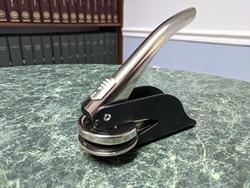
A corporate seal, sometimes called a company seal, is an official stamp used to signify a business's formal approval of a document. Traditionally, corporations use a physical embosser that presses the company's seal into paper, making the document official. This imprint served as the organization's signature long before modern signature laws existed.
Although corporate seals have become more symbolic than legally necessary, they still represent a company's authority and authenticity. Today, a corporate seal may be physical, digital, or included automatically in corporate kits, but its purpose remains the same: to represent the company's official endorsement of a document.
Parts of a Corporate Seal
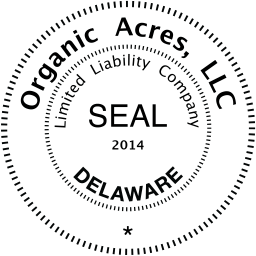
While designs can vary, most corporate seals follow a consistent structure that conveys a company's essential identifying information. Some common elements found on a corporate seal are:
- Company Name
- State of Incorporation or Formation
- Year of Incorporation or Formation
- The Words "Corporate Seal" or just "Seal"
While the information listed above is seen pretty frequently, not all company seals contain the same information. Keep in mind that in some countries, seals may carry greater legal significance. The design may include additional identifiers, such as registration numbers or official government emblems. In the United States, as long as the seal reliably identifies the company, its exact layout usually doesn't affect its validity.
Get answers for all your business needs
Not sure what’s right for your company? Speak directly with our specialists and get clarity before you make your next move.
Talk to an expert
Do I Need a Company Seal?
For most modern businesses, a company seal is optional rather than required. Historically, seals were essential for authorizing contracts, resolutions, and official filings. Today, however, U.S. law recognizes signatures from authorized officers as sufficient for nearly all business purposes. Still, some organizations choose to maintain a corporate seal for formality.
State corporate statutes used to require every corporation to adopt one of these company stamps, but those laws have largely been eliminated or updated to make seals optional. In practice, signatures (not seals) create binding corporate obligations. LLCs, on the other hand, have never been required to use a seal. They are governed by operating agreements rather than traditional corporate practices. However, an LLC may still choose to create a seal for symbolic or administrative purposes.
At the end of the day, a corporate seal is legally recognized in every U.S. state, but that recognition does not mean it's required, even in Delaware. Delaware General Corporation Law (DGCL) allows corporations to adopt a seal, but explicitly states that a corporate seal is not necessary.
Documents Commonly Using a Corporate Seal
While a corporate seal isn't a mandatory inclusion, some companies still choose to stamp them on important company documents. Here are a few places that you'll be most likely to find one.
- Stock certificates
- Employment and vendor contracts
- Meeting minutes from board meetings
- Real estate documents
- Agreements of sale
- Loan documents
- Other commitments by the company
Just keep in mind that in nearly all cases, you do not need to use a seal on these documents. A signature from an authorized officer should be legally sufficient.
Digital Seals
A digital corporate seal is an electronic representation of a company's official seal. It typically includes the same information found on the physical version. As business documentation continues shifting online, many companies now use digital seals alongside traditional embossers. A digital seal can be applied electronically to PDFs, digital certificates, and other online documents.
Functionally, digital seals cover almost all of the same bases as a traditional seal. Legally, neither type of seal is required in most U.S. jurisdictions, but both are used as indicators of corporate approval or authenticity.
How to Get a Corporate Seal
Obtaining a corporate seal is pretty easy, and for most businesses, creating the seal is entirely optional. Because Delaware does not regulate the design or issuance of corporate seals, companies have flexibility when creating one. Still, most businesses purchase their seal through a corporate kit. Delaware does not prescribe a specific format for corporate seals. This means you can choose any design that clearly identifies your company. The basic process is similar across the United States.
It's worth noting that a few jurisdictions outside the U.S., particularly in Asia and parts of Europe, may require registration numbers on the seal.
Get a Free Company Seal
When you form a Delaware company with Harvard Business Services, Inc., our team will always include a free digital corporate seal, regardless of which formation package you select. Furthermore, through our standard package, new business owners will also receive a physical, fold-up style embosser with lead-cast lettering. This means that you'll be free to create digital and physical company seals whenever you choose.
Corporate Seal FAQs
What happens if my corporation doesn't have a seal?
If your corporation doesn't have a seal, nothing legally changes. Your business can still operate fully and execute all necessary documents. Modern corporate laws recognize signatures from authorized officers as sufficient proof of approval. A seal is mostly symbolic. If a bank, title company, or international partner requests one, you can simply order a seal at that time.
What should I do if I lose my corporate seal?
If you lose your corporate seal, you can simply create and order a replacement. There's no legal penalty or special filing required when ordering a new seal. If your bylaws mention the seal, note the replacement in your corporate records for consistency. If you ever make updates to your seal, ensure the old seal is no longer accessible.
Can an LLC use a corporate seal?
Yes, an LLC can use a corporate seal, but it's entirely optional. LLCs are not required by any U.S. state to adopt a seal, and most legal documents are fully valid with just an authorized signature. Some LLCs choose to use a seal for formality, branding, or to authenticate membership certificates. If you want one, you can create a seal just as a corporation would, using the LLC's legal name and formation details.
Get answers for all your business needs
Not sure what’s right for your company? Speak directly with our specialists and get clarity before you make your next move.
Talk to an expert*Disclaimer*: Harvard Business Services, Inc. is neither a law firm nor an accounting firm and, even in cases where the author is an attorney, or a tax professional, nothing in this article constitutes legal or tax advice. This article provides general commentary on, and analysis of, the subject addressed. We strongly advise that you consult an attorney or tax professional to receive legal or tax guidance tailored to your specific circumstances. Any action taken or not taken based on this article is at your own risk. If an article cites or provides a link to third-party sources or websites, Harvard Business Services, Inc. is not responsible for and makes no representations regarding such source’s content or accuracy. Opinions expressed in this article do not necessarily reflect those of Harvard Business Services, Inc.
More By Devin Scott
![]()
Email this article to a friend
There are 26 comments left for Requirements for a Company Seal
Denis Mountain said: Thursday, June 2, 2022I have no idea earlier about this but after reading your blog i got lot of informations about requirement of company seals. Thank you so much.
HBS Staff replied: Thursday, June 2, 2022Thank you for reading our blog. We are glad you found it to be helpful. If you have any questions we are here to assist.
Mrs. Stewart said: Thursday, July 22, 2021My LLC was not formed with Harvard Business Services, can I still purchase a seal and/or kit?
HBS Staff replied: Thursday, July 22, 2021Hi Mrs. Stewart, a member of our sales team will be reaching out to you about your request!
Rakhi Krishna said: Monday, March 15, 2021How do I obtain/ order a digital corporate seal. Thank you.
HBS Staff replied: Monday, March 15, 2021Rakhi,
We will be happy to email your digital corporate seal.
Notary Services said: Thursday, February 4, 2021This is really Helpful Content That you share with your audience and Thank you So Much With This Useful Information.
HBS Staff replied: Thursday, February 4, 2021Thank you for reading our article and we are glad you found it helpful.
Ibrahim Hamza said: Thursday, December 17, 2020How does it cost to own a seal?
HBS Staff replied: Thursday, December 17, 2020We offer a corporate seal as part of our corporate kit. The cost starts at $65, depending on where you are located. Please contact our sales team for more information: sales@delawareinc.com or 800-345-2677 ext 6911.