
Book Review: Superagency: What Could Possibly Go Right With Our AI Future

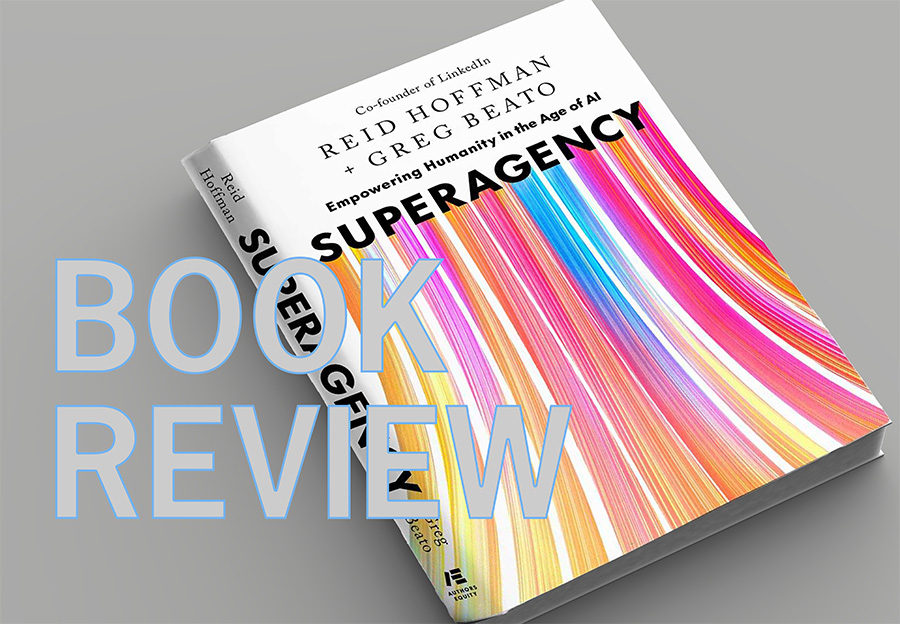 For businesses operating in the LLC and incorporation space — especially those working with Delaware entities — artificial intelligence often feels like both an opportunity and a risk. Superagency: What Could Possibly Go Right with Our AI Future by Reid Hoffman and Greg Beato offers a timely and optimistic perspective that is particularly relevant to this industry. Rather than asking how AI might disrupt business formation and compliance services, the book challenges readers to consider how AI can strengthen decision-making, efficiency, and client experience.
The core concept of the book, “superagency,” refers to the expanded ability of individuals and organizations to act effectively when supported by advanced tools like AI. In the context of Delaware LLCs and corporations, this idea translates directly to how businesses form, manage, and maintain entities. AI has the potential to streamline processes such as entity selection, document preparation, compliance tracking, and customer support — allowing professionals to focus less on manual tasks and more on strategic guidance.
Hoffman and Beato emphasize that AI should be viewed as an enhancement, not a replacement, for human expertise. This is an important distinction for incorporation professionals. While AI can assist with drafting operating agreements, flagging filing deadlines, or answering common questions about Delaware requirements, it does not replace the judgment needed to advise clients on ownership structures, liability considerations, or long-term growth plans. Instead, AI becomes a force multiplier that helps teams operate more accurately and at greater scale.
A recurring theme in Superagency is the importance of learning through real world use. The authors advocate for responsible deployment — adopting AI tools early, monitoring outcomes, and improving systems over time. For businesses that form and manage Delaware entities, this mindset aligns well with ongoing regulatory updates and evolving client needs. AI systems can be trained to adapt quickly to changes in state filing rules, annual report requirements, or compliance deadlines, reducing errors and improving reliability.
The book’s optimistic tone may feel overly confident to some readers, particularly when it comes to ethical concerns or data privacy. In an industry handling sensitive business information, these issues cannot be ignored. However, Superagency does not dismiss these risks; instead, it frames them as challenges that require thoughtful implementation, transparency, and oversight — especially important when dealing with confidential ownership and corporate records.
Ultimately, Superagency is a forward-looking guide for businesses willing to embrace innovation without losing sight of responsibility. For professionals working with Delaware LLCs and corporations, the book reinforces a valuable message: AI is not about cutting corners or replacing expertise, but about improving accuracy, speed, and service quality. Those who adopt this mindset will be better positioned to support clients in a business environment that increasingly values efficiency, compliance, and informed decision-making.
For more information on specifically starting a Delaware LLC or Corporation, please visit delawareinc.com.
*Disclaimer*: Harvard Business Services, Inc. is neither a law firm nor an accounting firm and, even in cases where the author is an attorney, or a tax professional, nothing in this article constitutes legal or tax advice. This article provides general commentary on, and analysis of, the subject addressed. We strongly advise that you consult an attorney or tax professional to receive legal or tax guidance tailored to your specific circumstances. Any action taken or not taken based on this article is at your own risk. If an article cites or provides a link to third-party sources or websites, Harvard Business Services, Inc. is not responsible for and makes no representations regarding such source’s content or accuracy. Opinions expressed in this article do not necessarily reflect those of Harvard Business Services, Inc.